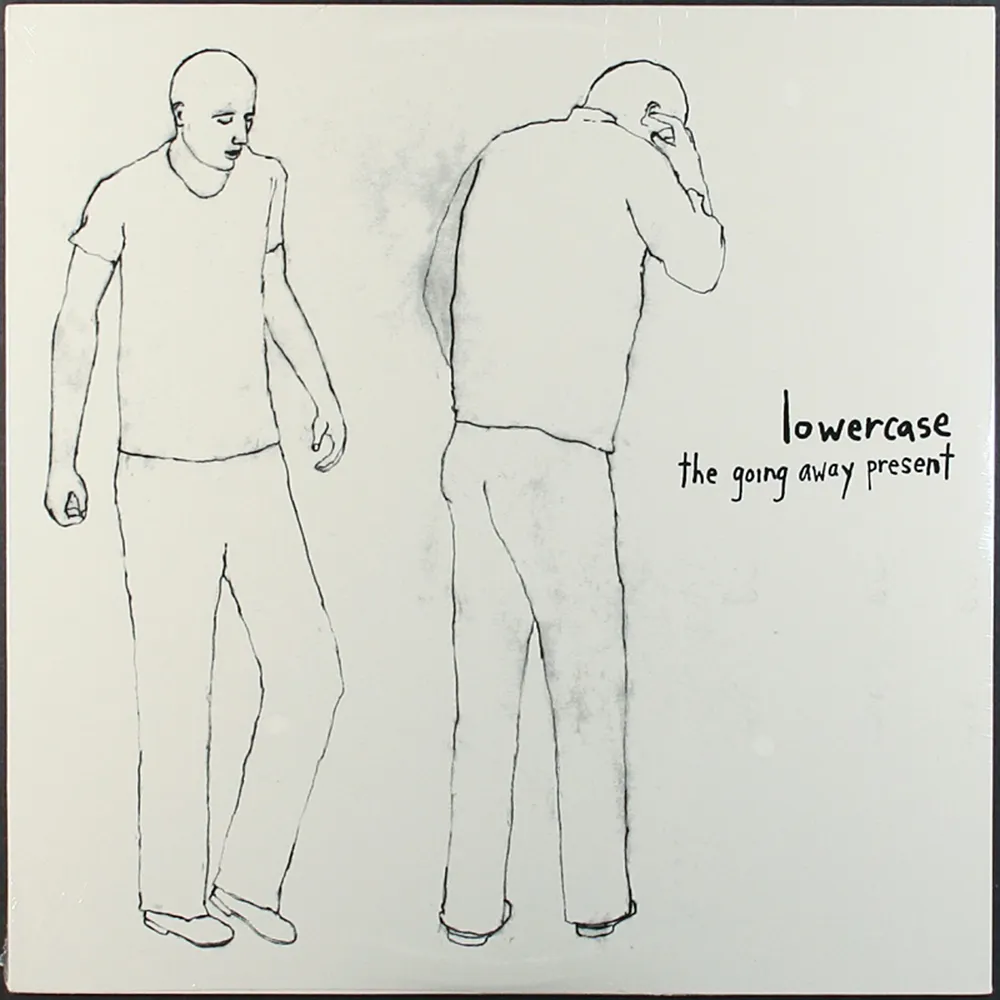
Floodlit opens Lowercase's The Going Away Present the way a room fills before anyone speaks: gradually, uneasily, with light that does not quite comfort. The Southern California band had spent the 1990s refining a sound that sat between slowcore's suspended grief and post-hardcore's coiled force, and here, at the threshold of their final record, they choose restraint over spectacle. The title track would arrive later on the album; Floodlit sets the tone first, as if the going away has already begun and what remains is the harsh clarity of exposure.
Imaad Wasif's guitar work defines the piece from its first notes. Lines ring out and decay in wide, arid space, never rushing toward resolution. Tim Green's production at Louder Studios gives every gesture room to breathe, and that distance becomes part of the drama: the music feels observed from across an empty lot, lit by sodium lamps that flatten colour into glare. Brian Girgus's drums enter with measured weight rather than propulsion, and Tiber Scheer's bass anchors the slow pulse beneath. Nothing announces itself as a chorus so much as a shift in pressure, a gathering of mass that the band holds and releases with uncommon patience.
Wasif's voice is the emotional centre. He sings as if confiding at the edge of audibility, his delivery neither theatrical nor detached but locked into the song's suspended tempo. Floodlit does not perform catharsis; it sustains unease, letting melody surface and submerge within the same grey atmosphere. That choice aligns Lowercase with the slowcore tradition while keeping a harder edge intact, a tension the band had pursued since their earliest singles but never rendered with such unhurried conviction.
What makes the track iconic within the Lowercase catalogue is how completely it embodies the album's farewell. Released in 1999 on Punk In My Vitamins, The Going Away Present would prove to be the band's last full-length statement before dissolution, and Floodlit reads as its overture: six minutes of light that reveals rather than warms, of space that feels inhabited yet abandoned. Later tracks on the record would explore sharper dynamics and longer arcs, but none match the opening's distilled mood, the sense that something essential has already been decided and the music is simply documenting the aftermath.
Floodlit endures because it trusts duration and silence as much as melody. In a decade crowded with louder declarations, Lowercase offered something rarer: a song that makes stillness feel volatile, where floodlights do not guide you home but leave you standing, fully seen, in the open.