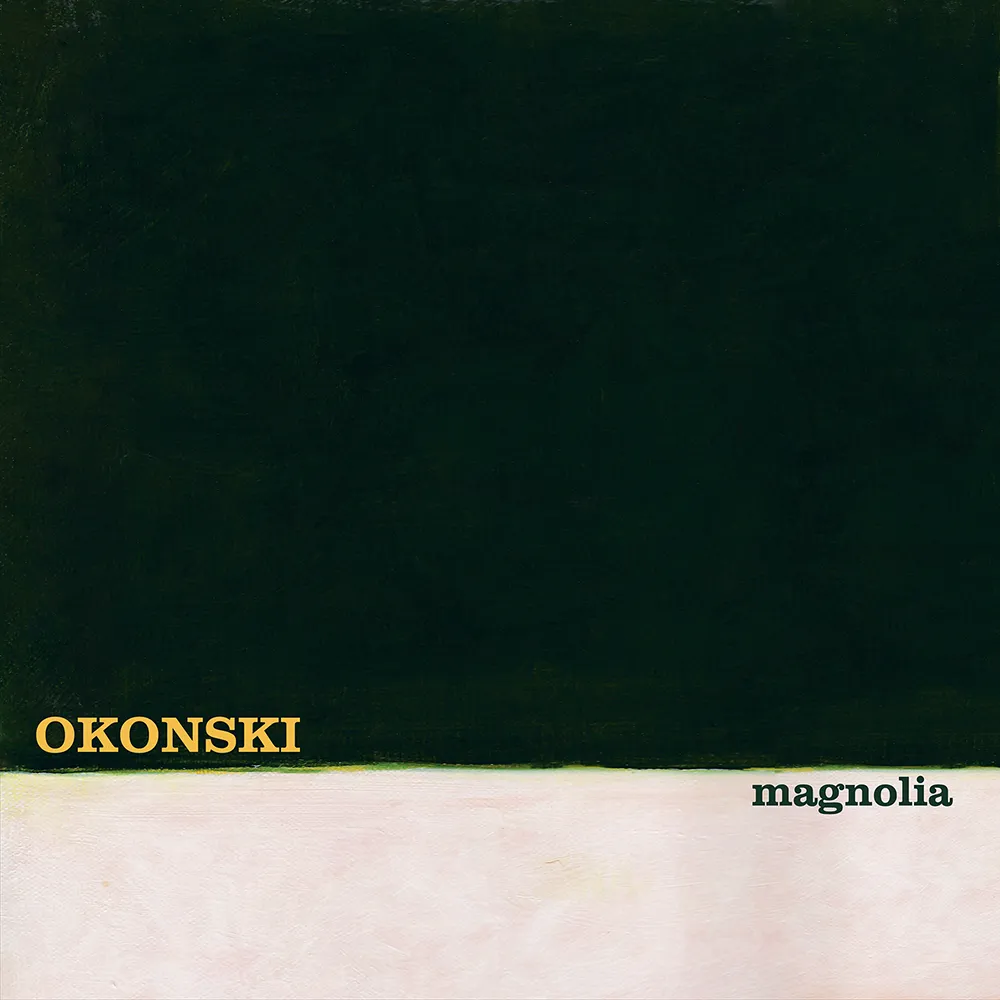
Dark Moon arrives midway through Okonski's debut album Magnolia, and it is the piece that most clearly states what the trio is after: not virtuosity for its own sake, but the feeling of walking a quiet street after midnight when the city has finally stopped explaining itself. Released in February 2023 on Colemine Records, Magnolia documents sessions at the label's Loveland, Ohio studio where pianist Steve Okonski, drummer Aaron Frazer, and bassist Michael Isvara Montgomery improvised live to tape. Dark Moon lasts just over three minutes, yet it carries the album's central metaphor in its title, turning lunar imagery into sound that is spare, unhurried, and deeply conversational.
What distinguishes the track within Okonski's catalogue is how completely it trusts silence. Okonski came up through classical training before finding his voice in spiritual jazz and modal improvisation; here his piano lines do not chase complexity so much as they suggest space, each phrase leaving room for Montgomery's warm bass and Frazer's restrained drums to answer. Both rhythm section partners are familiar from Durand Jones & The Indications, and that soul-band discipline shows in how little they need to play to sustain tension. The result sits comfortably beside Bill Evans or Ahmad Jamal in its patience, yet the production retains the close, late-night intimacy of Colemine's analogue chain, including material captured on a Tascam 388 during after-hours runs at the label headquarters.
Within Magnolia, Dark Moon follows the brief interlude Old Friend and prepares the longer emotional arc of Song For My Sister's Son and Walking To A Home. The sequencing matters because the album was never a set of isolated sketches: a first 2020 session yielded composed instrumentals, but a return in 2021 leaned into collective improvisation, and tracks such as Sunday convinced the group that spontaneity should lead. Dark Moon is where that philosophy feels most cinematic, a nocturne that does not need a crescendo to prove its weight. Listeners who discovered the project through Colemine's soul and funk roster may hear Okonski as a different language from the same house: still groove-aware, but oriented toward introspection rather than dance-floor release.
For anyone treating modern jazz piano trios as a refuge from noise, Dark Moon has become a favourite entry point into Magnolia, and the track's streaming life reflects that slow-burn attachment. Okonski, Frazer, and Montgomery do not perform drama; they perform presence, and the moonlit calm of this piece is the proof. Years after its release, it still sounds like the hour when improvisation stops performing and simply listens back.
By its close, Dark Moon has done the work of a short story. Okonski leaves the listener on a sidewalk that exists only in music, with light pooled on keys and cymbals, and with the sense that the trio could continue indefinitely without breaking the spell. On Magnolia, that restraint is not absence; it is the album's most generous gesture toward anyone who needs jazz to feel like room to breathe.