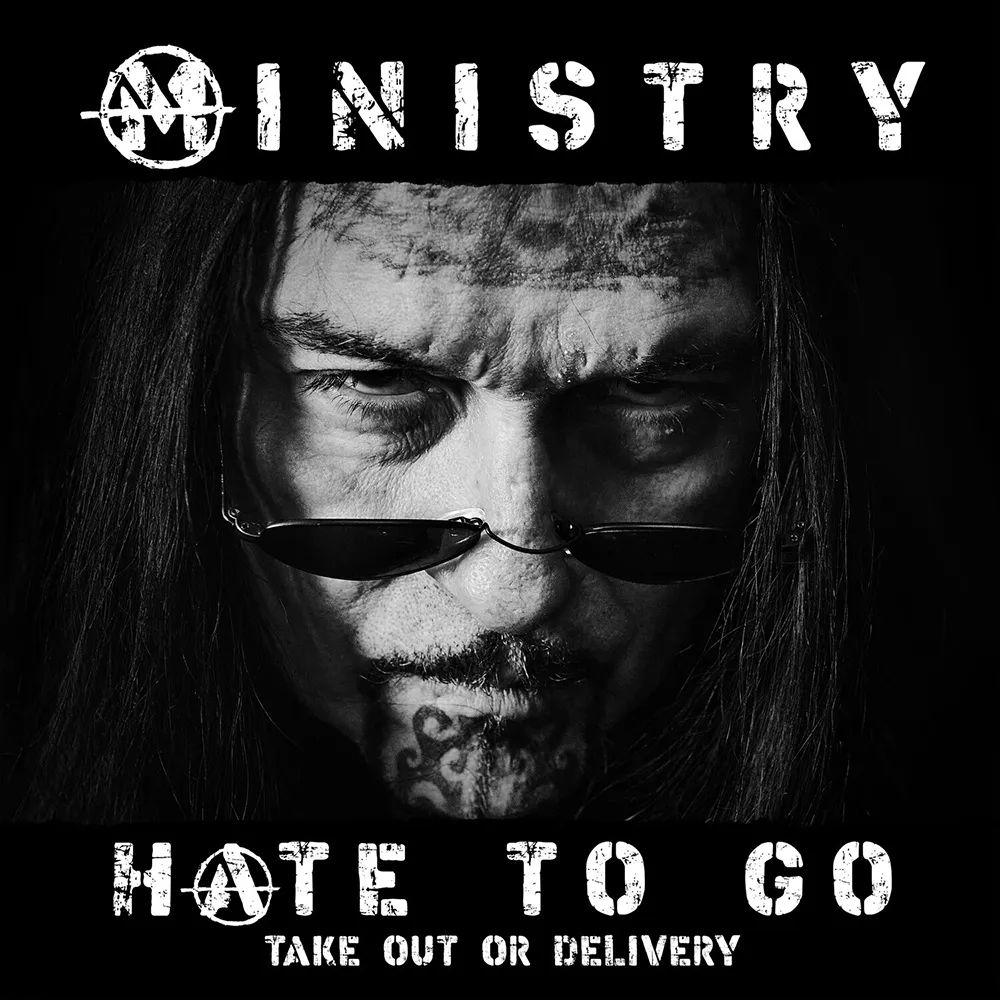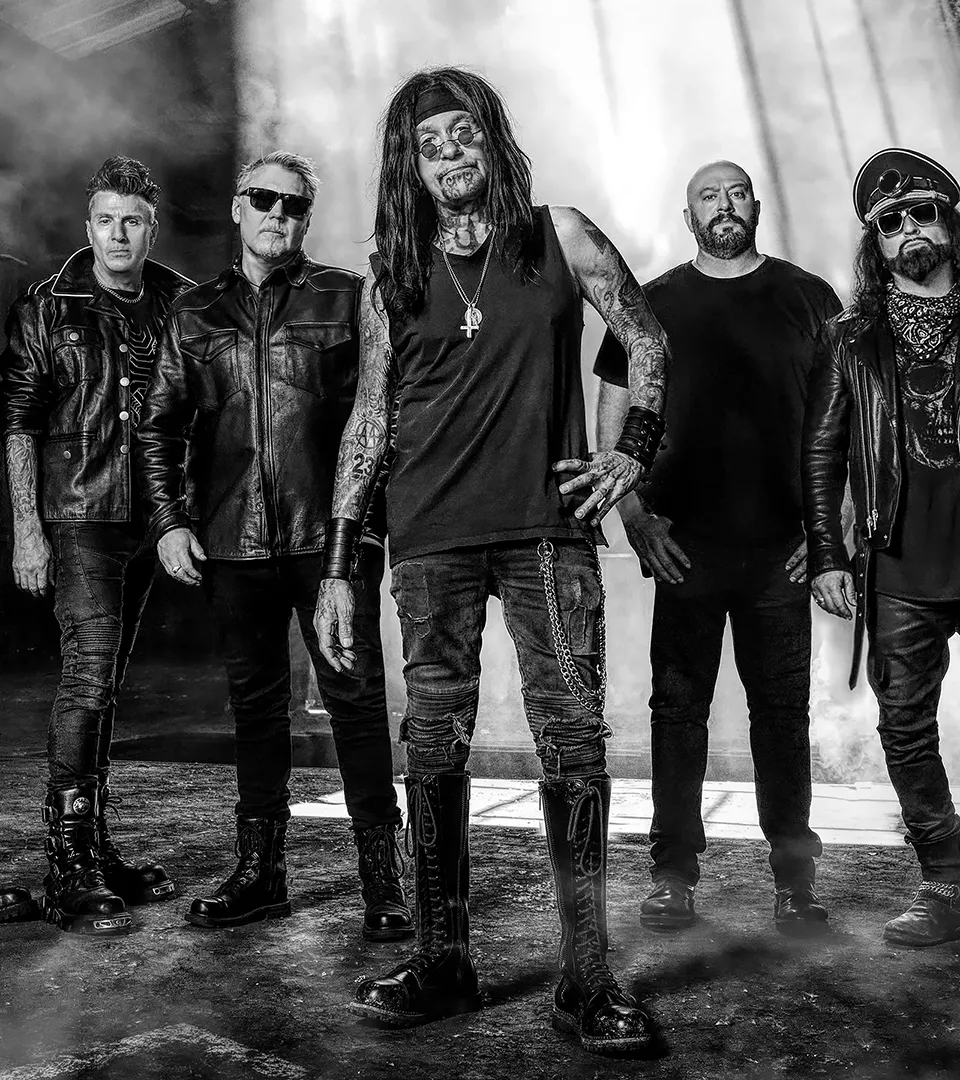
Ministry
Ministry is an American industrial metal band formed in Chicago, Illinois, in 1981 by Cuban-born musician, singer, and producer Al Jourgensen. Widely regarded as one of the pioneering forces behind industrial metal, the group has developed a distinctive sound combining aggressive guitar riffs, electronic sequencing, distorted vocals, mechanical rhythms, sampling, and politically charged lyrics. Emerging from the early 1980s synth-pop and post-punk underground, Ministry gradually transformed into a confrontational fusion of industrial music, thrash metal, hardcore punk, and electronic experimentation, influencing generations of musicians across alternative and heavy music.
The project's earliest recordings reflected Jourgensen's involvement in Chicago's emerging electronic music scene. Ministry's debut album, With Sympathy, released in 1983 through Arista Records, explored synth-pop and new wave, featuring melodic synthesizers, dance-oriented rhythms, and relatively conventional song structures. Although the album introduced the band to a wider audience, Jourgensen later distanced himself from its polished production and commercial direction. Seeking greater artistic freedom, he began moving toward darker and more experimental electronic music, influenced by European industrial acts such as Throbbing Gristle, Cabaret Voltaire, and Einstürzende Neubauten.
This transformation became apparent with Twitch, released in 1986 through Sire Records. Produced in collaboration with Adrian Sherwood, the album introduced abrasive drum programming, fragmented samples, distorted electronics, and a more confrontational vocal approach. Drawing heavily on industrial music, dub production techniques, and electronic body music, Twitch marked a decisive departure from Ministry's synth-pop beginnings. Its dense, rhythmically driven arrangements established the foundations of the mechanical and aggressive sound that would define the band's subsequent recordings.
The release of The Land of Rape and Honey in 1988 represented a major turning point. Incorporating heavily distorted guitars, relentless programmed percussion, and extensive sampling, the album brought industrial electronics into direct contact with the intensity of thrash metal and hardcore punk. Tracks such as Stigmata, Deity, and The Missing introduced a sound characterized by repetitive guitar patterns, abrasive production, and a sense of overwhelming mechanical force. The record became a landmark in the development of industrial metal, demonstrating how electronic experimentation and extreme guitar music could be integrated into a unified musical language.
With The Mind Is a Terrible Thing to Taste in 1989, Ministry further refined this approach. The album intensified the interaction between electronic sequencing, distorted guitars, and confrontational vocals, producing some of the band's most recognizable early compositions. Tracks including Thieves, Burning Inside, and So What combined relentless rhythmic structures with samples taken from films, television, and political speeches. During this period, bassist and multi-instrumentalist Paul Barker became an essential creative partner, contributing significantly to the group's songwriting, arrangements, and production. The partnership between Jourgensen and Barker would define Ministry's most influential era.
The band's commercial and artistic breakthrough arrived with Psalm 69: The Way to Succeed and the Way to Suck Eggs, released in 1992. Combining the precision of industrial electronics with the aggression of thrash metal, the album brought Ministry to a much broader audience. Tracks such as N.W.O., Just One Fix, and Jesus Built My Hotrod, the latter featuring Gibby Haynes of Butthole Surfers, became defining examples of industrial metal. The album's mixture of distorted guitars, programmed rhythms, chaotic samples, and provocative imagery established Ministry as one of the most influential heavy alternative bands of the decade.
Following the success of Psalm 69, Ministry released Filth Pig in 1996, adopting a slower, heavier, and more oppressive musical direction. Moving away from the frantic electronic structures of its predecessor, the album emphasized downtuned guitars, sludge-influenced rhythms, and bleak atmospheres. Dark Side of the Spoon, released in 1999, continued this exploration through more experimental arrangements and unsettling sonic textures. Both recordings reflected a period of personal and creative instability, while demonstrating the band's willingness to challenge the expectations created by its earlier success.
In 2003, Ministry returned with Animositisomina, an album that reintroduced faster tempos and a more direct industrial metal approach. The following year, Paul Barker departed after nearly two decades of collaboration, marking the end of a defining creative partnership. Jourgensen subsequently developed a series of albums strongly focused on criticism of the administration of American president George W. Bush. Houses of the Molé in 2004, Rio Grande Blood in 2006, and The Last Sucker in 2007 combined politically explicit lyrics, aggressive thrash metal influences, and the band's characteristic electronic production.
After announcing Ministry's retirement in 2008, Jourgensen eventually revived the project, releasing Relapse in 2012 and From Beer to Eternity in 2013. The latter was completed following the death of guitarist Mike Scaccia, a longtime collaborator whose contributions had been central to the band's sound since the late 1980s. Scaccia's powerful guitar playing and precise rhythmic attack helped define Ministry's combination of metal intensity and electronic repetition. His death marked a significant moment in the band's history, with Jourgensen initially presenting From Beer to Eternity as its final studio album.
Despite these intentions, Ministry continued recording and performing. AmeriKKKant, released in 2018, returned to the group's tradition of politically charged industrial metal, incorporating extensive sampling, distorted electronic textures, and criticism of contemporary American political culture. The album featured contributions from musicians including Burton C. Bell, formerly of Fear Factory, and DJ Swamp, expanding its combination of metal, industrial electronics, and turntable manipulation.
With Moral Hygiene in 2021, Ministry explored themes of political polarization, misinformation, authoritarianism, and social instability. The album balanced aggressive industrial metal with moments of electronic experimentation and atmospheric tension. Tracks such as Alert Level, Good Trouble, and Disinformation demonstrated the band's continued interest in using repetition, distortion, and sampled voices to create music that was both rhythmically forceful and socially confrontational.
In 2024, Ministry released HOPIUMFORTHEMASSES through Nuclear Blast Records. The album continued Jourgensen's exploration of contemporary social and political tensions, combining heavy guitar riffs, electronic programming, abrasive vocal performances, and dark humor. Featuring contributions from Eugene Hütz of Gogol Bordello, Jello Biafra, and Corrosion of Conformity vocalist Pepper Keenan, the record reflected the band's longstanding connections with punk, metal, and alternative music. Songs such as Goddamn White Trash, New Religion, and B.D.E. maintained Ministry's characteristic mixture of mechanical aggression and provocative commentary.
Beyond its studio recordings, Ministry has played a fundamental role in shaping the development of industrial metal and alternative heavy music. The band's influence can be heard in artists such as Nine Inch Nails, Fear Factory, Rammstein, Static-X, and numerous groups combining electronic production with distorted guitars. Jourgensen's parallel projects, including Revolting Cocks, Lard, and 1000 Homo DJs, further extended his influence across industrial rock, punk, electronic music, and experimental sound.
More than four decades after its formation, Ministry remains one of the defining names in industrial music. From the synthetic dance rhythms of With Sympathy to the mechanical violence of The Land of Rape and Honey, the genre-defining intensity of Psalm 69, and the politically confrontational recordings of its later career, the band has continually transformed its musical identity while preserving a recognizable sense of aggression and experimentation. Through his uncompromising approach to sound design, sampling, guitar distortion, and rhythmic construction, Al Jourgensen has established a legacy that extends far beyond industrial metal. Ministry ultimately represents the collision of electronic machinery, heavy music, and social commentary, transforming noise, repetition, and sonic confrontation into a powerful form of musical expression.