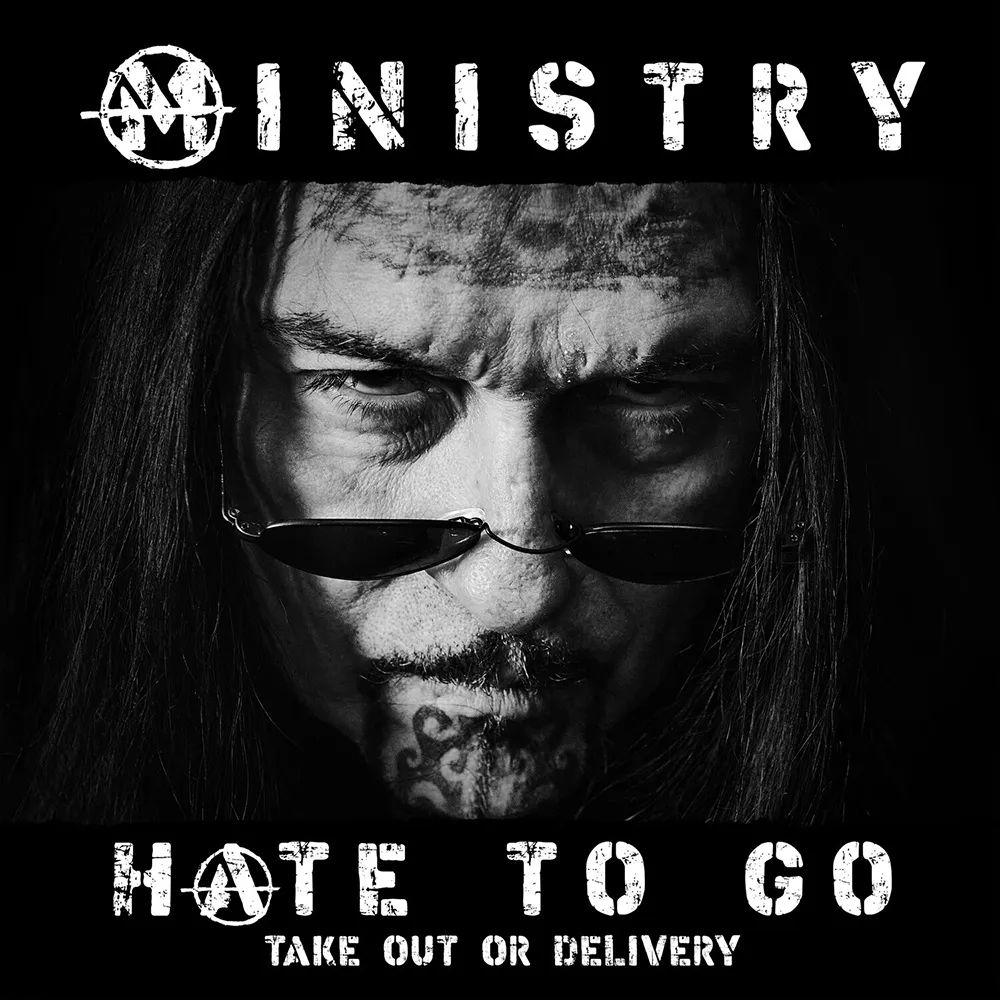
Released in 2026 on Cleopatra Records, Ministry’s Hate To Go - Take Out Or Delivery stands as a furious farewell from one of industrial music’s most influential bands. After more than four decades of sonic experimentation and political confrontation, Al Jourgensen delivers what is intended to be Ministry’s final studio album. Revisiting the mechanical aggression of their legendary Wax Trax! era while retaining the metallic brutality of their later work, the record feels like a final reckoning with a world increasingly consumed by political manipulation, technological alienation, and social decay.
From the opening assault of Crickets and Voices of Hate, Ministry unleash a relentless collision of distorted guitars, pounding electronic rhythms, and abrasive vocal performances. Yet beneath the aggression, traces of the band's early post-punk and electronic influences emerge through unexpectedly melodic passages. Jourgensen's unmistakable voice cuts through the industrial machinery, transforming political frustration into something visceral and confrontational. The atmosphere is claustrophobic, saturated with noise, and driven by an almost apocalyptic sense of urgency.
The album moves between punishing industrial metal and more rhythmically driven electronic compositions. Tracks like We Hate, Delete, and Singularity combine mechanical repetition with sharp melodic hooks, while Grifter and Burned Out explore darker, more oppressive territories. Samples, synthetic voices, and distorted electronic textures reinforce the impression of a society overwhelmed by its own technological creations. The arrangements remain direct and aggressive, but occasional shifts in tempo and atmosphere prevent the record from becoming entirely monolithic.
What distinguishes Hate To Go - Take Out Or Delivery is its sense of historical closure. Ministry revisit the sonic vocabulary that helped define industrial metal, from the relentless rhythmic machinery of The Land of Rape and Honey to the confrontational intensity of Psalm 69. Yet this is more than an exercise in nostalgia. Jourgensen's anger remains firmly rooted in the present, addressing political deception, digital manipulation, and the increasingly blurred boundaries between human expression and artificial intelligence.
Sonically, the album is dense, abrasive, and deliberately overwhelming. Heavily processed guitars collide with programmed percussion, while distorted bass frequencies and fragmented samples create an atmosphere of constant instability. The production emphasizes impact over subtlety, preserving the raw physicality that has always defined Ministry's most uncompromising work. Beneath the chaos, however, carefully constructed rhythmic patterns and electronic details reveal the precision behind the apparent disorder.
While firmly rooted in industrial metal, the record also reflects the broader musical identity of a band that has continually moved between synth-pop, post-punk, hardcore, and thrash. Its political anger is inseparable from its musical aggression, turning repetition and distortion into expressions of resistance. The closing We're Still Here, featuring the return of longtime collaborator Paul Barker, introduces a particularly meaningful sense of continuity, reconnecting Ministry's turbulent present with one of the most defining creative partnerships in its history.
By the time Hate To Go - Take Out Or Delivery reaches its conclusion, Ministry leave behind neither reconciliation nor quiet resignation. Instead, the album feels like one final act of defiance, a ferocious statement from an artist who has spent his career confronting the contradictions of modern society. Brutal, cynical, and relentlessly confrontational, it brings the band's extraordinary journey full circle, allowing the industrial machinery to grind to a halt without ever surrendering its anger.