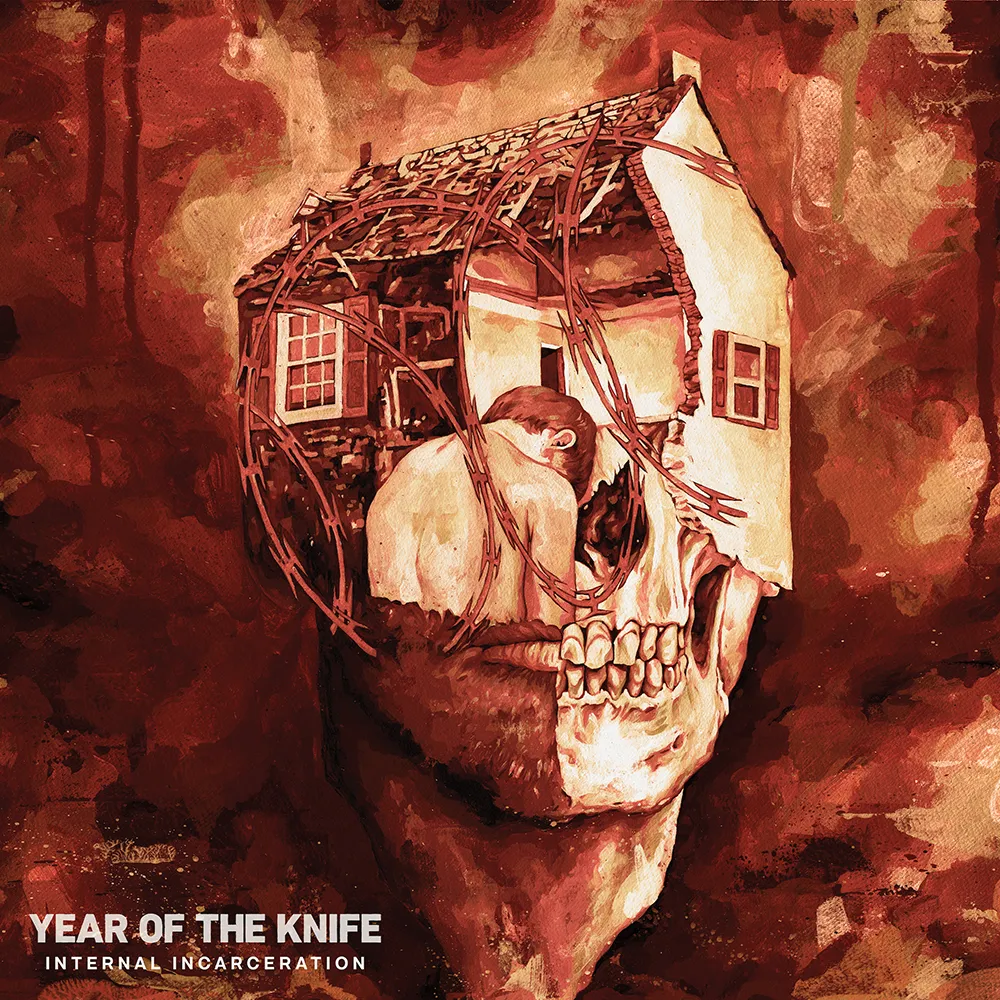
Released in 2020, Year of the Knife’s Internal Incarceration is a relentless debut album that gives psychological confinement a brutally physical form. Across thirteen compact tracks, the Delaware band combines metallic hardcore, death-metal weight, and straight-edge conviction into music defined by anger, loss, and the struggle to remain in control.
The opening track, This Time, offers almost no preparation. Guitars arrive in blunt, percussive strikes while the rhythm section drives forward with suffocating force. Tyler Mullen’s vocals sound less like a performance than a confrontation, each phrase delivered with the urgency of someone forcing an internal crisis into the open.
Virtual Narcotic sharpens the album’s attack. Lasting barely more than ninety seconds, the song addresses the ways distraction and dependency can become forms of self-imprisonment. Its riffs are simple but devastating, alternating between rapid metallic momentum and breakdowns designed to make every impact feel unavoidable. Nothing is wasted; the track enters, strikes, and disappears.
Addiction and its consequences run throughout the record. Stay Away, Manipulation Artist, and Final Tears examine destructive behavior not from a safe distance but from within the damage it creates. The lyrics confront isolation, grief, and betrayal with little interest in metaphor. Yet beneath the hostility lies a belief in hardcore as a source of community, a place where private suffering can be recognized and shared.
The title track captures that contradiction most clearly. Internal Incarceration suggests a prison constructed from compulsions, memories, and patterns of thought. The guitars lock into tightly controlled rhythms while the drums alternate between violent acceleration and punishing half-time weight. The music creates the sensation of struggling against walls that exist inside the mind, where escape requires confronting the self.
The album’s second half offers no release from that pressure. Premonitions of You and Sick Statistic push further into metallic territory, using sharp rhythmic shifts and dissonant guitar lines to sustain a constant state of alarm. Eviction and Nothing to Nobody turn feelings of rejection into direct physical force, their breakdowns arriving not as decoration but as the emotional conclusions of the songs.
Recorded by Kurt Ballou, Internal Incarceration possesses the clarity and density required for this kind of music. Every guitar strike has weight, the bass reinforces the lowest edges of the mix, and the drums remain precise even during the record’s most chaotic passages. Ballou’s production preserves the abrasive character of the band without allowing its speed and distortion to become indistinct.
The closing pair, Get It Out and DDM, compress the album’s central message into one final surge. Expression becomes a means of survival: anger must be externalized before it turns inward and becomes another form of captivity. The record ends without calm or easy resolution, but the act of confrontation itself provides a kind of release.
By the time Internal Incarceration finishes its half-hour assault, it feels both exhausting and cleansing. Year of the Knife do not treat hardship as an abstract aesthetic; they present it as something lived, inherited, and fought against every day. The result is a hardcore record of remarkable focus, violent in sound, clear in purpose, and sustained by the belief that isolation can be broken through collective force.