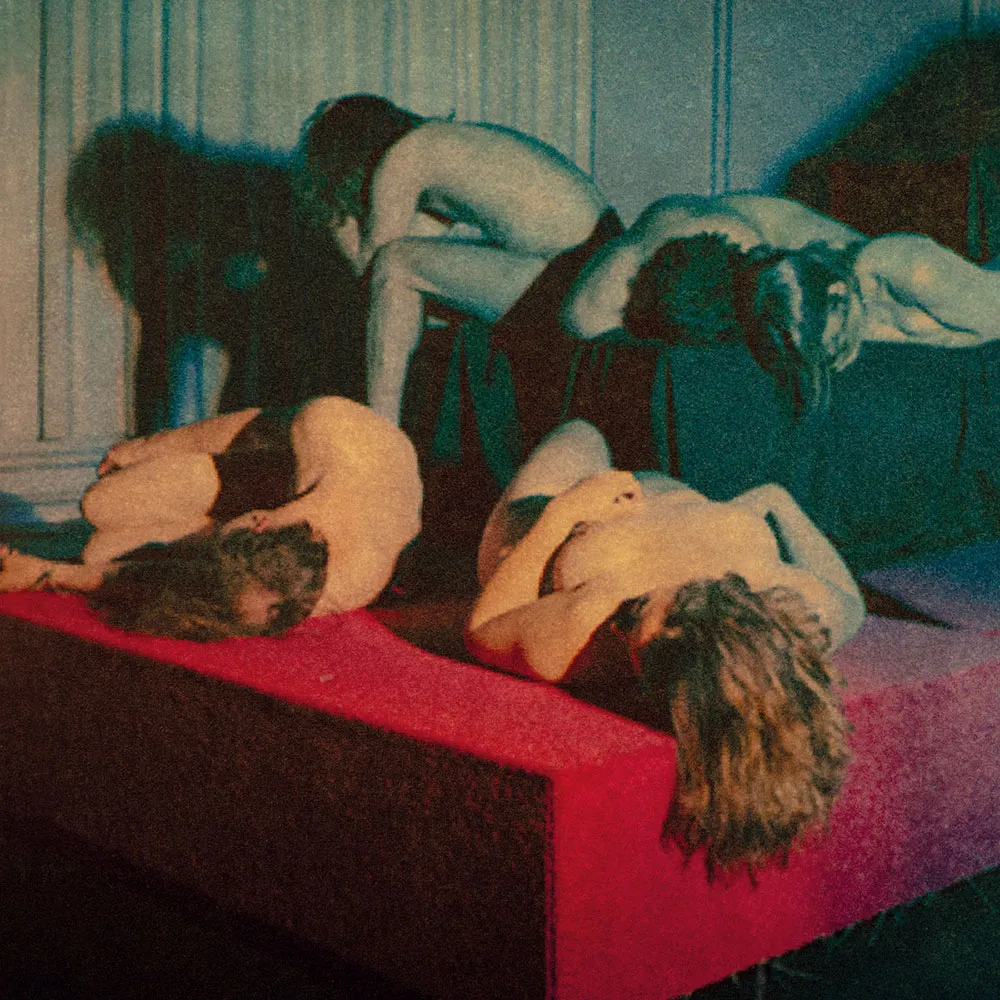
Released in 2018, Whispering Sons’ Image is a stark and commanding debut that turns alienation into physical sound. Drawing from post-punk, darkwave, and industrial rock, the Belgian band creates a world of rigid rhythms, corroded guitars, and psychological unease. The album feels motionless yet intensely pressurized, as though every song were trapped inside a room whose walls are slowly moving inward.
The opening track, Stalemate, establishes that sense of paralysis immediately. Drums strike with mechanical precision while bass and guitar repeat cold, tightly controlled figures. Fenne Kuppens’ deep voice arrives like a warning from within the music, carrying both authority and vulnerability. Her delivery gives the song an almost theatrical gravity, but the emotions beneath it remain painfully direct.
On Got a Light, the band allows tension to accumulate through repetition. The rhythm section advances with funereal determination as guitar noise flickers across the arrangement. Small changes in volume and texture gradually make the song feel enormous. Whispering Sons understand that intensity does not require speed; it can emerge from holding a single gesture until it becomes impossible to ignore.
Alone and Skin bring the record’s themes of separation into sharper focus. Their melodies are immediate, but the surrounding atmosphere remains hostile and unstable. Synthesizers create a cold artificial glow, while the guitars seem to scrape against the edges of the songs. Kuppens’ vocals move between detachment and desperation, suggesting someone attempting to maintain control while everything internal begins to fracture.
The album’s middle section becomes increasingly claustrophobic. No Time drives forward with nervous momentum, while Fragments reduces experience to disconnected impressions. On Hollow, an insistent bass line and pounding drums create one of the record’s most hypnotic passages. The arrangement grows through pressure rather than ornament, each repetition making the emotional emptiness at its center feel more tangible.
Tracks such as Waste and Dense reveal the band’s ability to combine raw performance with carefully constructed atmosphere. The music is severe without becoming minimal, filled with feedback, reverberation, and electronic detail. There are echoes of early European post-punk throughout the album, but Whispering Sons avoid simple revivalism. Their sound is too urgent and physically imposing to feel like an exercise in nostalgia.
Produced by Micha Volders, engineered and co-produced by Bert Vliegen, and mixed by Bert Libeert, Image possesses a harsh but spacious sonic character. The bass remains prominent, the drums have a dry industrial force, and the guitars alternate between sharp attacks and blurred clouds of noise. Even at its most artificial, the production preserves the strain of people playing together in a room.
The closing track, No Image, brings the album’s central ideas to their bleakest conclusion. Over six slowly intensifying minutes, identity appears to dissolve into rhythm, repetition, and noise. The title suggests not merely invisibility but the absence of a stable self, nothing solid enough to be captured or reflected. As the track expands, the distinction between emotional collapse and release becomes increasingly difficult to locate.
By the time Image reaches silence, it has created a complete psychological environment: cold, enclosed, and relentlessly alert. Whispering Sons transform feelings of alienation and unreality into music with genuine bodily force. The result is a debut that feels both carefully designed and emotionally exposed, a frozen image whose surface continues to tremble.