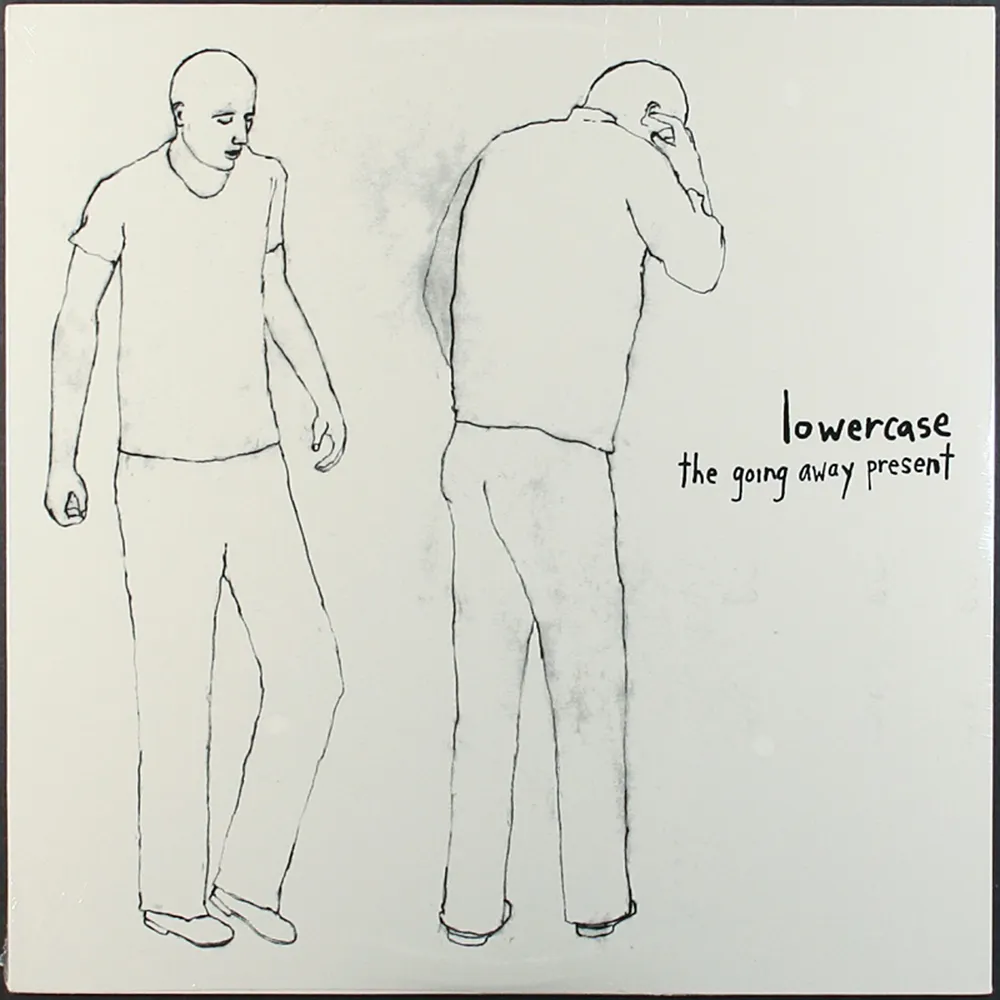
Released in 1999 as the opening track of Lowercase’s final album, The Going Away Present, Floodlit is a slow-burning collision of noise rock, post-hardcore, and emotional exhaustion. Over six tense minutes, the Southern California band transforms a sparse guitar figure into something vast and oppressive, establishing the atmosphere of resignation that hangs over the entire record.
The song begins with deceptive restraint. Brian Girgus settles into a simple, unhurried drum pattern while Tiber Scheer’s bass provides a heavy pulse beneath Imaad Wasif’s guitar. The arrangement feels almost empty, yet that emptiness is carefully controlled. Every beat and scraped chord occupies a precise place, leaving enough silence for anticipation to become part of the music.
Wasif’s voice appears thin, distant, and strained against the weight of the rhythm section. Rather than dominating the track, it seems trapped inside it, struggling to rise through the accumulating noise. His delivery gives Floodlit a peculiar intimacy: the listener is not being addressed from a stage but overhearing someone trying to articulate pain in an otherwise abandoned room.
As the song develops, repetition becomes a form of pressure. Lowercase do not build through conventional hooks or dramatic shifts. They hold their central patterns until those patterns begin to feel unstable, allowing small changes in volume and distortion to carry enormous emotional force. The effect recalls slowcore’s patience, but the tension underneath is unmistakably rooted in hardcore.
When the track finally reaches its climax, the release is both violent and incomplete. Guitar distortion spreads across the mix, Girgus strikes with increasing force, and the earlier restraint gives way to something rawer. Yet the explosion does not resolve the despair that preceded it. It merely reveals how much tension had been concealed inside the quieter passages.
Recorded by Tim Green at Louder Studios in San Francisco near the end of 1998, Floodlit possesses a stark, physical clarity. The guitar sounds frayed without becoming indistinct, the bass remains deep and audible, and the drums retain the dry impact of a live performance. The production makes the trio feel exposed, with little separating the listener from the scrape of strings or the decay of the final chords.
The title suggests illumination, but there is nothing comforting about the light surrounding this song. To be floodlit is to be visible without necessarily being understood, to stand exposed in a brightness that offers no warmth. Lowercase turn that contradiction into sound, creating music that is simultaneously open and claustrophobic.
As the entrance to The Going Away Present, Floodlit functions like a door opening onto a landscape of defeat, obsession, and departure. It captures Lowercase at their most disciplined and emotionally severe, proving how much intensity can be created from very little. The song does not ask for attention; it fixes the listener in place beneath its cold light.