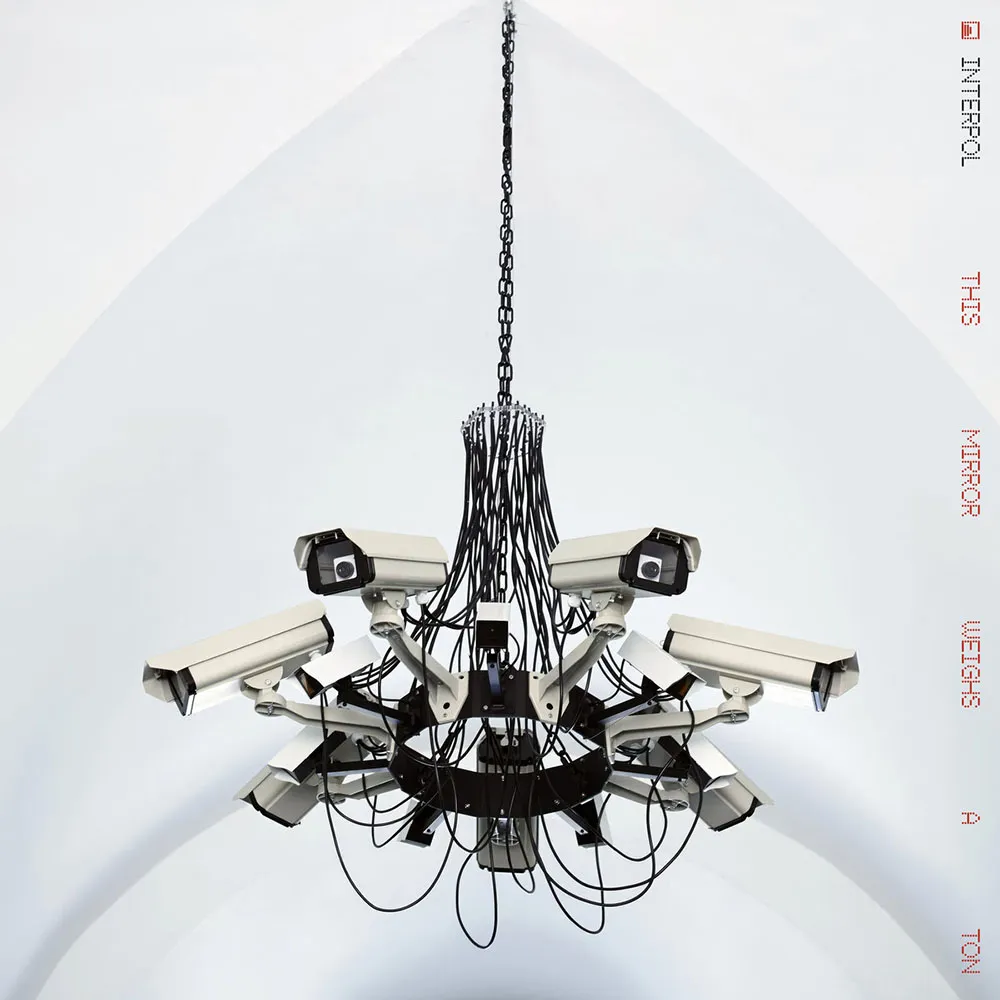
Released in 2026, Interpol’s This Mirror Weighs a Ton finds the New York band confronting the weight of its own history without becoming trapped by it. More than two decades after Turn on the Bright Lights established their unmistakable vocabulary of nocturnal guitars, taut rhythms, and romantic unease, Interpol sound less interested in recreating their early urgency than in examining what remains of it. The result is a record about reflection, memory, and the strange burden of recognizing yourself in the person you used to be.
From the opening moments of the title track, the familiar Interpol architecture feels subtly altered. Daniel Kessler’s guitar still traces those nervous, geometric patterns, while Paul Banks’ baritone remains cool and shadowed, but the space around them has widened. Synthesizers, reverberant textures, and restrained electronic details soften the band’s usual hard edges, giving the music a suspended, almost dreamlike quality. It sounds unmistakably like Interpol, only viewed through fogged glass.
The album’s pacing reinforces that feeling. Rather than relying constantly on the tightly wound momentum that once defined them, songs are allowed to stretch, breathe, and accumulate tension gradually. When the rhythm section does accelerate, the effect is all the more striking: Sam Fogarino’s drumming provides the physical pulse beneath music increasingly concerned with atmosphere. The tension no longer comes simply from speed or repetition, but from the space between movements, from arrangements that seem perpetually on the verge of revealing something.
What distinguishes This Mirror Weighs a Ton within Interpol’s catalogue is its willingness to expand the band’s familiar palette without abandoning its identity. Acoustic elements, orchestral touches, synthesizers, and processed sounds appear around the skeletal interplay of guitar, bass, and drums. Rather than functioning as decoration, these textures deepen the record’s sense of uncertainty. The darkness here is less urban and immediate than on the band’s earliest work; it feels internal, shaped by recollection and the distortions that occur when the past is examined for too long.
Sonically, the record balances density with unusual openness. The guitars retain their metallic clarity, but they no longer dominate every corner of the mix, while the bass often acts as a melodic current beneath Banks’ restrained vocals. His voice, once capable of making emotional detachment sound almost confrontational, now carries a different kind of gravity. There is weariness in these performances, but also acceptance. The music does not attempt to disguise the passing of time; it incorporates it.
While This Mirror Weighs a Ton remains rooted in post-punk, it ultimately feels less concerned with genre than with atmosphere. Interpol’s greatest strength has always been their ability to make emotional ambiguity feel architectural, building songs from repetition, distance, and suggestion. Here, that quality becomes more introspective. Instead of the claustrophobic streets and doomed relationships associated with their early records, the album suggests empty rooms, half-remembered conversations, and the unsettling experience of encountering your former self in memory.
By the time the record reaches its final moments, This Mirror Weighs a Ton leaves behind something quieter than the dramatic tension traditionally associated with Interpol. It feels like a band standing before its own reflection and choosing neither to romanticize nor escape it. The mirror of the title is heavy because history is heavy, but Interpol carry that weight with remarkable restraint, turning the accumulated shadows of their past into something spacious, mature, and unexpectedly moving.