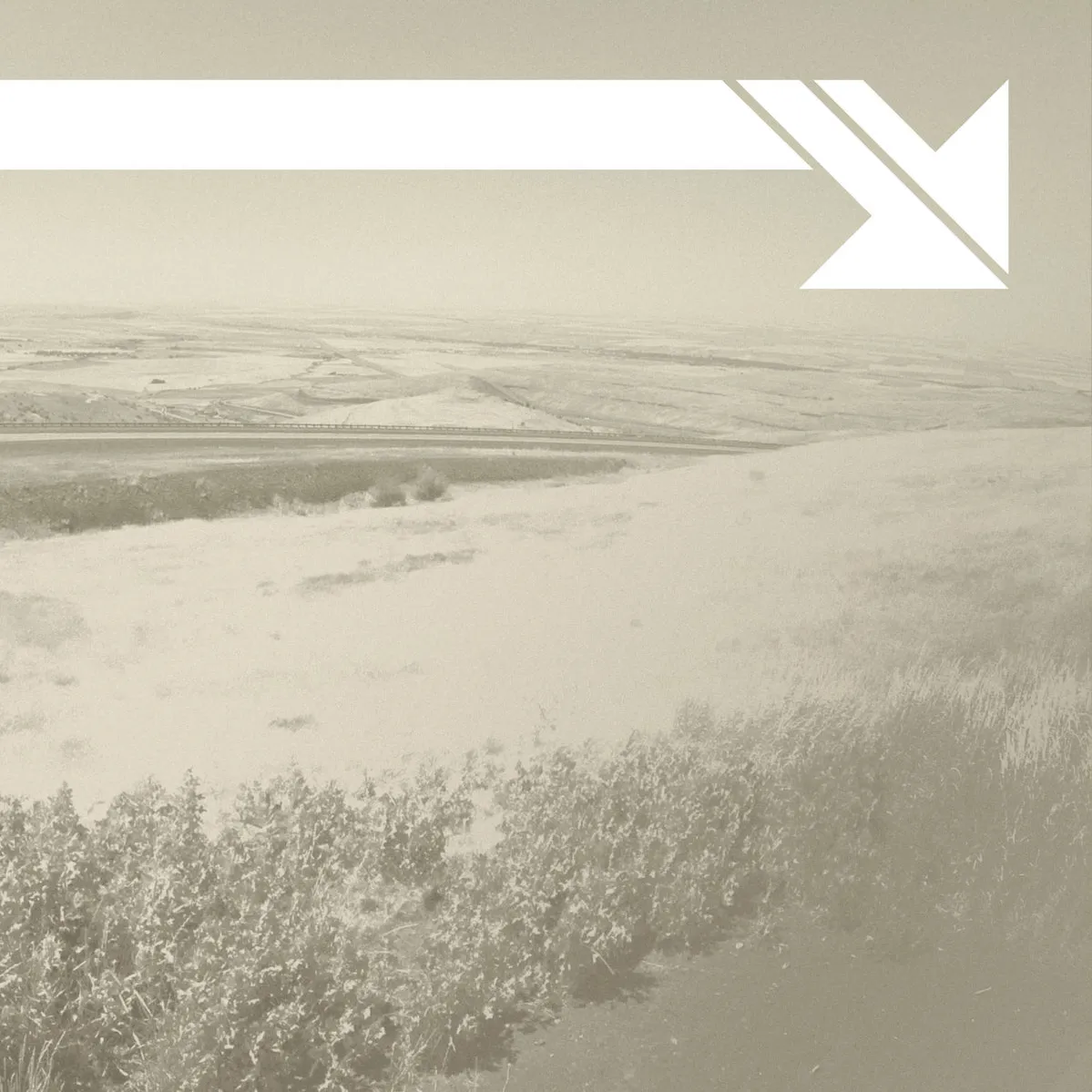
Released in 2012 by Bird’s Robe Records to coincide with an Australian tour, the City of Ships and Rosetta Split EP brings together two different interpretations of atmospheric heavy music. City of Ships contribute four compact pieces of melodic post-hardcore, while Rosetta occupy the record’s second half with two immense post-metal compositions. The contrast makes the EP feel less like a conventional collaboration than a conversation between urgency and scale.
City of Ships open with Bleach Funnel, a short, forceful track that balances abrasion with unusual melodic clarity. Eric Jernigan’s guitar shifts between sharp rhythmic figures and broader sheets of distortion, while Andrew Jernigan’s bass and Eric Soelzer’s drums keep the song moving with post-hardcore directness. The vocals emerge from inside the noise, strained but intelligible, giving the track a vulnerable human center.
Critical Vulture and Night Vision expand that approach without abandoning economy. The former moves through angular riffs and sudden changes in intensity, while the latter allows more space into the arrangement. City of Ships resist the slow, predictable crescendo often associated with post-metal; their songs are restless, capable of turning from introspection to impact within a few measures.
The band’s side concludes with King Temp, another tightly structured piece in which melody and distortion continually pull against one another. Its guitars suggest open space, but the rhythm section keeps the music grounded and physical. Across all four songs, City of Ships sound both expansive and immediate, music built for large emotional landscapes but delivered with the urgency of a basement show.
Rosetta’s TMA-1 changes the scale of the release completely. Named after the buried monolith in 2001: A Space Odyssey, the track unfolds patiently across more than ten minutes. Atmospheric guitar and low-frequency resonance create a sensation of enormous distance before the full band gathers around a repeating central movement. Rather than striking suddenly, the heaviness approaches like an object slowly entering orbit.
Clavius extends that cosmic isolation even further. Its title evokes the lunar crater and the moon base of Arthur C. Clarke and Stanley Kubrick’s imagined future, but Rosetta’s vision of space is neither clean nor triumphant. The music feels cold, hostile, and spiritually overwhelming. Guitars stretch toward the horizon while drums and bass supply a gravitational pull beneath them.
The EP’s two halves were recorded during different periods. City of Ships’ material was captured by Jeremy Griffith at Glow in the Dark Studios in Atlanta in December 2007 and originally appeared in the band’s Live Free or Don’t Tour collection. Rosetta recorded TMA-1 and Clavius at Jane Doll Studio in Pennsylvania in 2006 for Project Mercury; Matt Weed remastered both pieces for the 2012 split.
Those separate origins remain audible, but they strengthen the record’s character. City of Ships sound dry, immediate, and close to the listener, while Rosetta appear distant and enormous. One band explores the emotional pressure inside the individual song; the other treats sound as architecture, constructing spaces large enough for the listener to become lost within them.
By the time Clavius disappears into silence, the split has travelled from earthly confrontation to lunar desolation. Its power lies in the distance between its two bands: City of Ships provide movement, tension, and human urgency, while Rosetta answer with patience, mass, and the terrifying calm of deep space. Together, they create a compact document of post-metal’s range, half signal, half echo.