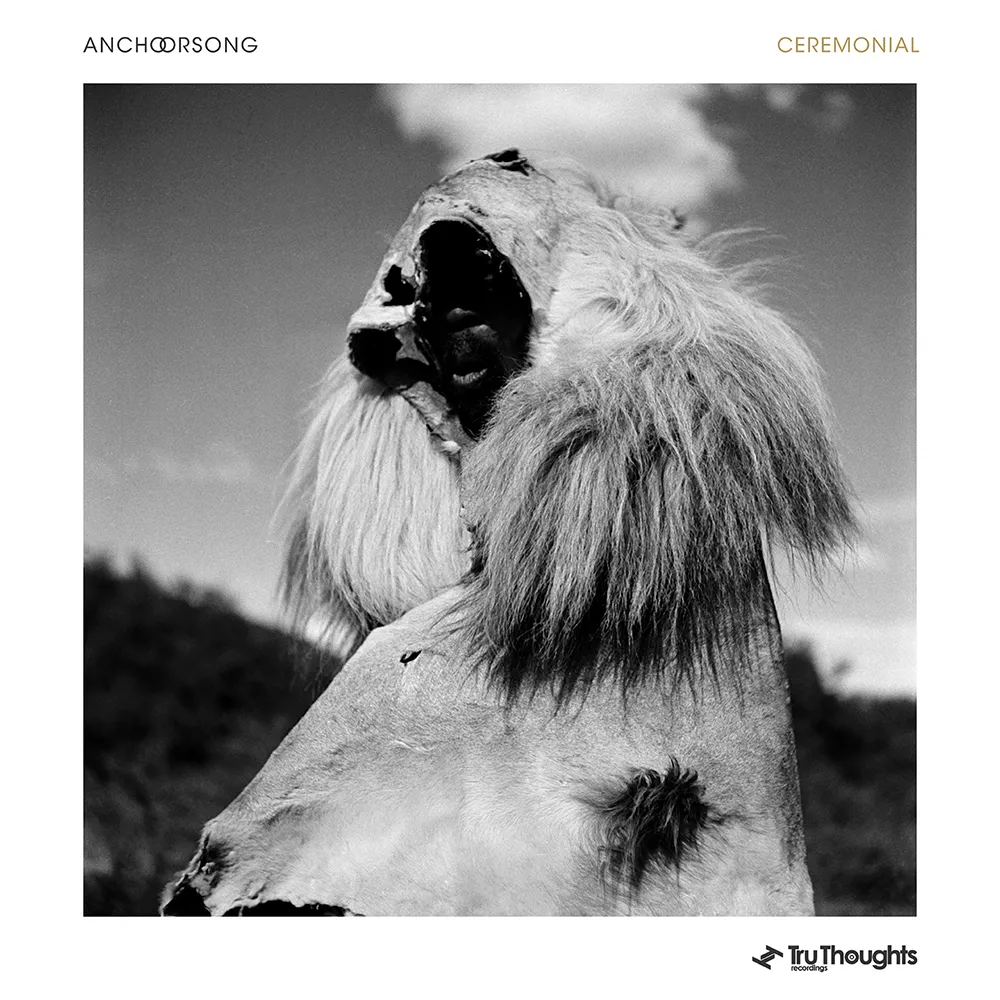
Released in 2016 on Tru Thoughts, Anchorsong’s Ceremonial is a vibrant fusion of electronic production and African rhythmic traditions, transforming Masaaki Yoshida’s meticulous approach to sampling into something unusually warm, organic, and celebratory. Inspired by his discovery of 1970s African music, particularly Orchestre Poly-Rythmo, Afrobeat and Highlife, the album moves beyond the intricate beat-making of his earlier work to embrace percussion, repetition, and communal energy.
From the opening pulse of Eve, Yoshida constructs a world where electronic precision and acoustic warmth seem inseparable. Hand percussion, clipped guitar figures, strings, bass lines, and carefully fragmented samples interlock into dense rhythmic patterns, while melodies emerge gradually from repetition. Rather than placing African influences over conventional electronic structures, Anchorsong allows rhythm itself to determine the shape of the music, giving each track the feeling of something assembled piece by piece and constantly in motion.
The record’s pacing is remarkably fluid. Tracks like Mother, Oriental Suite and Kajo develop through subtle accumulation, introducing small melodic or percussive elements until simple loops become elaborate arrangements. Monsoon, barely more than a minute long, works almost like an interlude before the expansive Butterflies restores the album’s hypnotic momentum. There is an almost ritualistic quality to these repetitions, but Yoshida’s sense of melody prevents them from ever becoming austere.
What sets Ceremonial apart is the naturalness with which Yoshida absorbs his influences. His fascination with African music began after encountering Orchestre Poly-Rythmo’s The Vodoun Effect, leading him deeper into the sounds of 1970s Africa and toward artists such as Fela Kuti. Yet the album never feels like an exercise in imitation. Instead, Yoshida translates the rhythmic vitality and celebratory character of those records through his own language of samplers, loops, and precise electronic construction.
Sonically, the album thrives on contrast. Percussion is crisp and immediate, while strings and melodic samples introduce a softer, almost cinematic dimension. On Butterflies and Rendezvous, layers circulate around one another without overcrowding the mix, creating music that feels simultaneously intricate and effortless. The production retains the clarity associated with Anchorsong’s earlier material, but here that precision serves a much more physical purpose: every element contributes to movement.
While Ceremonial is fundamentally an electronic record, its strongest quality is its sense of human presence. Yoshida had long approached live electronic music with the desire to recreate the excitement and connection he had experienced playing guitar in a band, constructing tracks in real time with samplers and keyboards. That philosophy seems embedded in the album itself. Even at its most meticulously programmed, the music rarely feels mechanical; rhythms breathe, melodies circle back upon themselves, and repetition becomes a source of anticipation rather than predictability.
By the time Last Feast, Outro and Ceremony bring the record toward its conclusion, Ceremonial feels less like a collection of individual tracks than a continuous celebration of rhythm and movement. Anchorsong succeeds in connecting distant musical traditions without flattening their differences, finding a meeting point between African-inspired polyrhythm, orchestral colour, and contemporary beat-making. The result is both intricate and immediately accessible, a record whose carefully constructed surfaces conceal an instinctive sense of joy, motion, and collective energy.