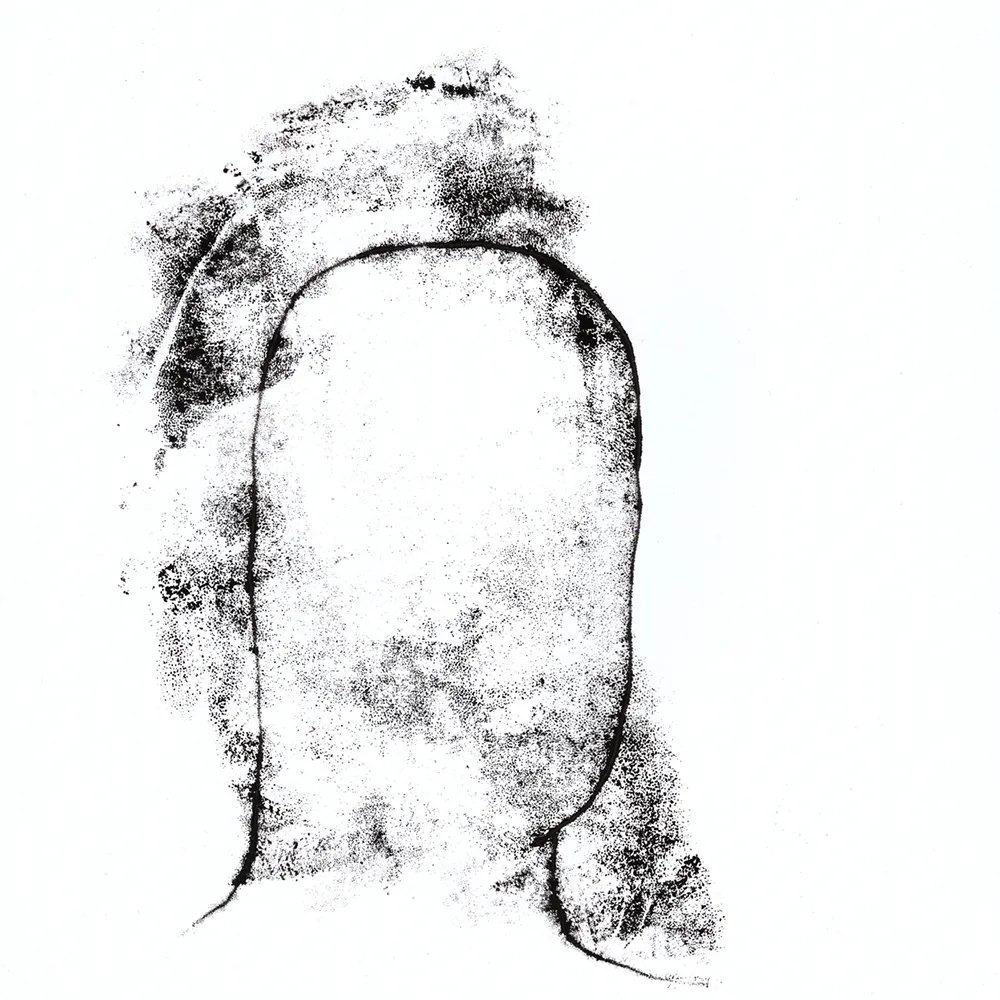
Released in 2015 on Ecstatic Recordings, Abul Mogard’s Circular Forms is a monumental work of ambient drone that transforms electronic sound into something weathered, physical, and deeply mournful. Across four extended compositions, synthesizers and Farfisa organ accumulate in slow-moving layers, creating music that feels less composed than uncovered as though these tones had been resonating beneath the world for years.
Slate-Coloured Storm opens the album with a mass of sound that seems to approach from a great distance. Low drones form a dark horizon while brighter frequencies move across them like weak light behind clouds. There is no conventional melody, yet the shifting overtones create their own emotional movement. The piece feels immense but strangely intimate, evoking grief on a scale too large for language.
On Bound Universe, Mogard compresses that vastness into something more enclosed. The title suggests infinity contained within a fixed space, and the music reflects that contradiction. Synthesizer tones circle one another without reaching resolution, their edges softened by distortion and harmonic decay. Every swell appears to return to its point of origin, changed slightly by the journey.
The record’s pacing is deliberately patient. Mogard does not use crescendos as obvious destinations; instead, volume rises and falls like pressure inside a sealed environment. Sounds overlap until their individual sources become impossible to identify. What might begin as an organ chord gradually resembles strings, wind, distant machinery, or the collective resonance of a large empty building.
Half Light of Dawn introduces a fragile suggestion of brightness. Higher tones shimmer above the drone, creating the impression of morning light entering a room that has remained dark for too long. Yet the piece never becomes comforting. Its radiance is inseparable from exhaustion, as though dawn has arrived without repairing anything the night has damaged.
The album’s second side is occupied entirely by House on the River, a sixteen-minute composition that brings Mogard’s methods to their fullest expression. The piece develops through long waves of organ and synthesizer, each one gathering density before slowly dissolving. Its imagined house feels suspended between permanence and erosion, while the river becomes a symbol of time moving continuously past it.
Sonically, Circular Forms is rich with saturation and controlled decay. Distortion does not function as aggression but as atmosphere, roughening the tones until they acquire the texture of damaged tape, corroded metal, or stone exposed to weather. The lowest frequencies provide enormous weight, while the upper harmonics flicker at the edge of audibility. Silence never fully arrives; even the quietest moments seem to contain the memory of sound.
Although the album is usually described as ambient or drone, its emotional force is closer to elegy. Mogard’s music does not withdraw from human feeling into abstraction. Instead, it enlarges longing, solitude, and remembrance until they become environments the listener can inhabit. The absence of rhythm or voice only makes that humanity more pronounced.
By the time House on the River fades, Circular Forms has created the sensation of returning to a place that may never have existed. Its structures are cyclical, but the listener does not emerge unchanged. Like memory itself, the music repeatedly approaches the same images while subtly altering their shape a vast, slow-turning monument to everything time carries away.